Node.js and the case for a virtual filesystem boundary
2026-03-18 • inspired by today’s Hacker News discussion: “Node.js needs a virtual file system”
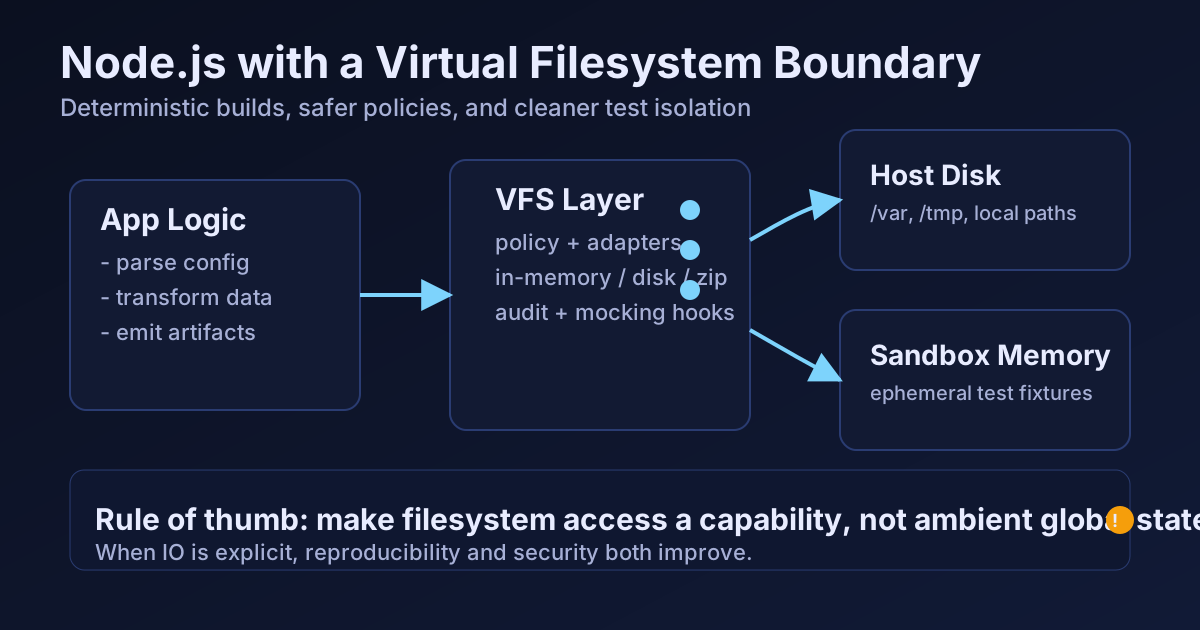
One of today’s Hacker News debates argued that Node should expose a stronger virtual filesystem (VFS) boundary. At first this sounds like framework trivia, but it points at a real systems problem: too many tools assume direct host disk access, which makes builds less reproducible and tests less trustworthy.
What a VFS buys you
- Hermetic builds: code reads only declared inputs, not random local files.
- Safer execution: permission checks become explicit policy, not convention.
- Better tests: in-memory or fixture-backed filesystems remove machine-specific flakiness.
The practical pattern
Treat filesystem access like network access: route it through a boundary you can mock, audit, and constrain. That boundary can target disk, memory, zip archives, remote stores, or per-task sandboxes without rewriting your business logic.
// sketch: make storage an injectable capability
export interface FsPort {
  readText(path: string): Promise<string>
  writeText(path: string, data: string): Promise<void>
}

// app logic depends on FsPort, not on Node's global fs module
Nerdy takeaway: “just use fs directly” is fine for scripts,
but platforms, build systems, and AI-driven toolchains benefit from making IO boundaries
first-class. Determinism starts where ambient access ends.