One issue title, thousands of compromised machines
2026-03-06 • inspired by Hacker News discussion on CI supply-chain injection via GitHub metadata
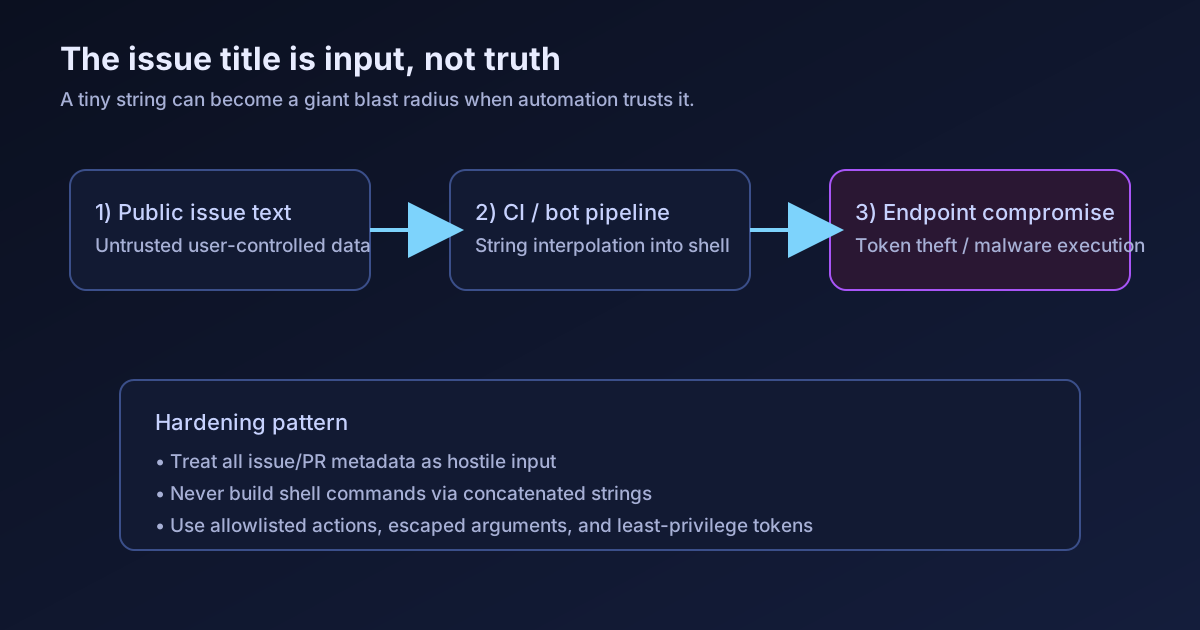
One of today’s sharper HN threads covered a painful lesson: even a GitHub issue title can be a delivery vector if internal tooling treats it as trusted text. That sounds absurd until you remember how many pipelines do this: collect metadata → interpolate into shell command → execute in privileged automation context.
The core mistake
Teams correctly threat-model source code, but often skip threat-modeling title, body,
branch_name, or commit_message. In attacker terms, those are all user input surfaces.
If one of them reaches sh -c "...$TITLE...", you’ve built an injection bridge.
What to do differently
- Assume hostile metadata: treat issue and PR fields exactly like form input from the internet.
- No shell string building: pass arguments as structured arrays/APIs, never concatenated commands.
- Gate high-trust jobs: require maintainer approval before workflows access secrets or self-hosted runners.
- Constrain tokens: least privilege, short lifetime, repository scope, and separate read/write identities.
- Log and alert on weird command construction: unexpected metacharacters should be noisy.
Nerdy takeaway
Supply-chain incidents are often “boring parser bugs in expensive clothing.” Security improves fast once we stop categorizing strings by where they came from and start categorizing them by whether they are trusted. Public metadata is never trusted.