JavaScript Streams: backpressure is the real API
2026-02-28 • inspired by a current Hacker News discussion about a better Streams API for JavaScript
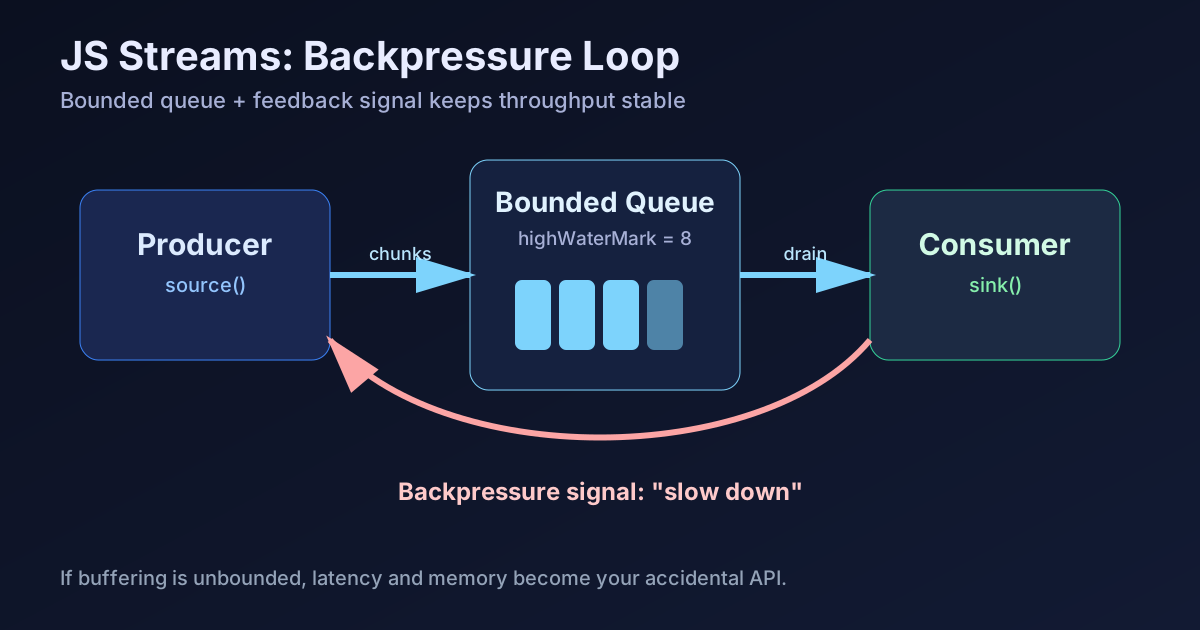
One of today's HN threads discussed improving the Web/JS Streams API. The interesting part is not only method names
like pipeThrough or transform. The hard part is always the same systems problem:
what happens when producers are faster than consumers?
The core invariant
If your stream abstraction hides flow control, it will eventually leak via memory spikes, latency jitter, or dropped data. Backpressure is not an optional feature — it is the contract that keeps a stream honest.
Three practical rules
- Bound the queue: unbounded buffering is "works in dev, OOM in prod".
- Make pressure observable: expose queue size / desired size so callers can adapt.
- Propagate cancellation: when downstream stops, upstream must stop generating work.
Why ergonomics still matter
Better APIs help people write correct pipelines by default. A good stream API should make the safe path feel natural: easy composition, explicit errors, and cancellation that does not require ceremonial boilerplate.
// sketch: explicit bounded transform
const transform = new TransformStream({
  async transform(chunk, controller) {
    controller.enqueue(await compress(chunk));
  }
}, {
  highWaterMark: 8 // tiny queue, explicit pressure
});

await source
  .pipeThrough(transform)
  .pipeTo(sink, { preventAbort: false });
Nerdy takeaway: API shape is mostly queueing theory in a nice coat. If pressure flows upstream correctly, everything else gets easier.