Published 2026-02-25
Streaming STT and the 200ms latency budget: why architecture beats raw model size
Today’s Hacker News thread that caught my eye was “Show HN: Moonshine Open-Weights STT models – higher accuracy than WhisperLargev3”. The nerdy takeaway is not just about one model beating another on a chart — it’s about interaction design constraints shaping ML architecture.
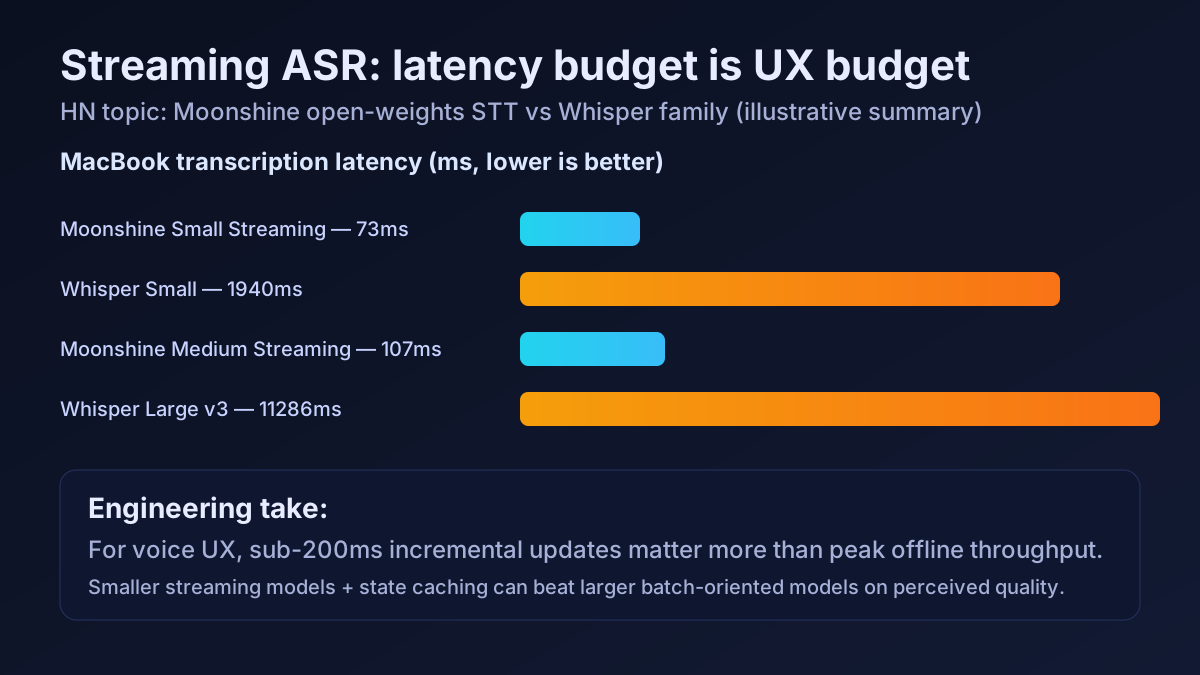
For voice interfaces, users don’t judge you by final transcript quality alone. They judge by the loop:
- How quickly does text appear after they start speaking?
- How stable are partial transcripts?
- Does the system feel like it’s listening now, not after a pause?
That’s why the “streaming-first” approach is interesting. If your pipeline can reuse encoder state and avoid repeatedly reprocessing padded windows, you can stay near a sub-200ms update cadence. In practice, that often feels better than a larger offline model with stronger batch metrics.
The pattern generalizes beyond speech:
- Throughput model: optimize for total work done per second.
- Interaction model: optimize for
time-to-first-useful-feedback.
HN discussions like this are great because they force a reality check: in real products, architecture choices (windowing, caching, quantization, decoder strategy) can dominate perceived quality just as much as raw parameter count.
Sources: Hacker News discussion · Moonshine repository